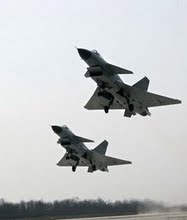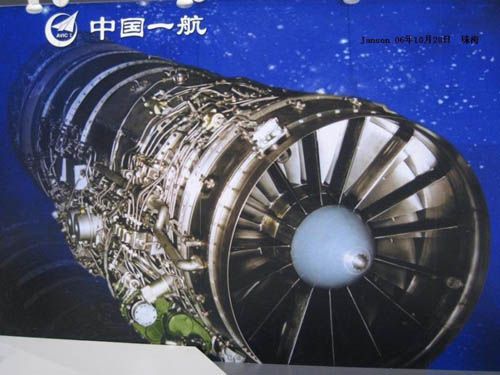
WS-10 Turbofan engine
Recently, AVIC-I announced that its "Taihang" (WS-10) has entered the mass production stage and been ready for being installed with PLA Air force main fighters, such as J-10 and J-11.
According to AVIC-I news resource, AVIC-I Shenyang Aero-engine Design & Research Institute (SEDRI), known as No.606 Institute, has resolved series of technological problems and the number of provided WS-10A engine, the production model, has reached the highest in history. "Taihang" Turbofan Engine has been finalized its prototype development and entered the batch production for PLA Air Force.
AVIC-I did not leash that what the exact kind of combat aircraft will use WS-10A. But it may be estimated that PLA Air Force's J-11B but not J-10 is the first user. J-10's rear fuselage is designed for installing with AL-31F turbofan engine, so WS-10A has to be decreased the maximum diameter for matching the size.
AVIC-I said that the SEDRI has achieved the sale of RMB 4.78 million (USD 66.4 million). Considering of the modern turbofan engine usually costs USD 2.7-3 millions, SEDRI almost provide 15-20 WS-10A engines for 7-8 J-11B dual-engine heavy air superiority fighters in last year. Certainly, future WS-10 manufacturing will be transferred to Liming Engine Corporation.
AVIC-I SEDRI also admitted that variants of WS-10 engine has been finished its design and solved relevant technical readiness. The most urgent one is the size modified and thrust enhanced WS-10, called as WS-10B for J-10 fighter and it has been granted testing approval successfully. AVIC-I SEDRI said that the WS-10B has been ready for Combat Aircraft Installation.
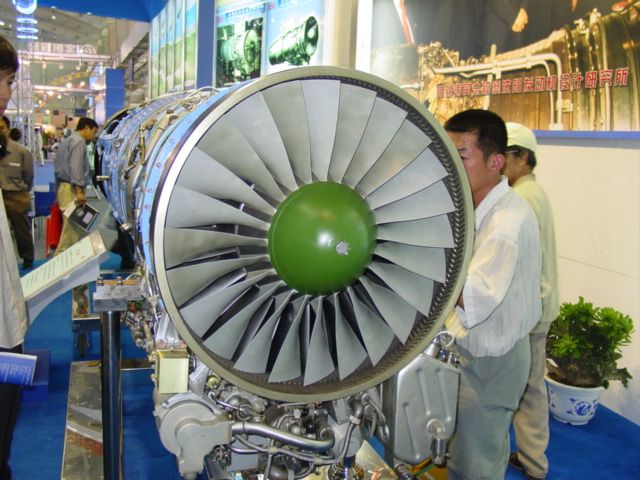
"Kunlun" Turbo Engine (WP-14)
SEDRI also introduced that "Kunlun" Turbo Engine (WP-14) improved model WP-14II has passed the technical examination and effectively ensure the delivery for new members of J-8II and J-7 family. China resource indicated that WP-14II’s maximum thrust has reached 8400 kg.
In addition, AVIC-I Xi'an Aero-engine (group) LTD finally was granted the production approval of "Qinling" WS-9 medium thrust turbofan engine, a copy of RR Spey MK202 imported for JH-7 fighter in 1970s. In 2005, WS-9 turbofan engine got its design approval after the project initiation in 1994.
Actually, PLA Air Force has been suffering from realizing Spey MK202 engine indigenous production for over 30 years. The success of WS-9 engine will greatly speed the deploying of more JH-7/JH-7A attackers. Comparing with original prototype engine, Xi'an Aero-engine (group) LTD has made modifications of new annular combustor, 4-stage fan, 10-stage high pressure Compressor and convergent—divergent nozzle.
In the middle of November, AVIC-I on its website announced that Shenyang Aircraft Designing Institute is going to delivering the detail design drawing of "Key Model" with AVIC-I’s other preponderant Institutes with advantages.

An artist's imagnination about China's future fighter
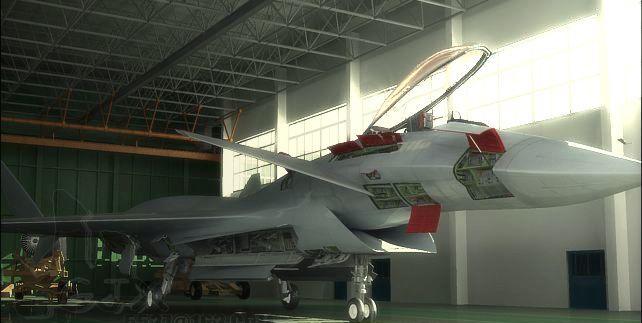
A realistic 3D image generated by software, was once believed as China's next generation fighter.
In the news story, this "Key Model" is eyed by SAC (Shenyang Aircraft Corporation)'s heads as a significant milestone in AVIC-I's Development. This so-called "Key Model" is probably one sub item of China's next generation air combat system project, which is a family jointly designed by SAC and CAC (Chengdu Aircraft Corporation), additionally including XAC (Xi’an Aircraft Corporation) and FAI (First Aircraft Institute) of AVIC-I possibly.
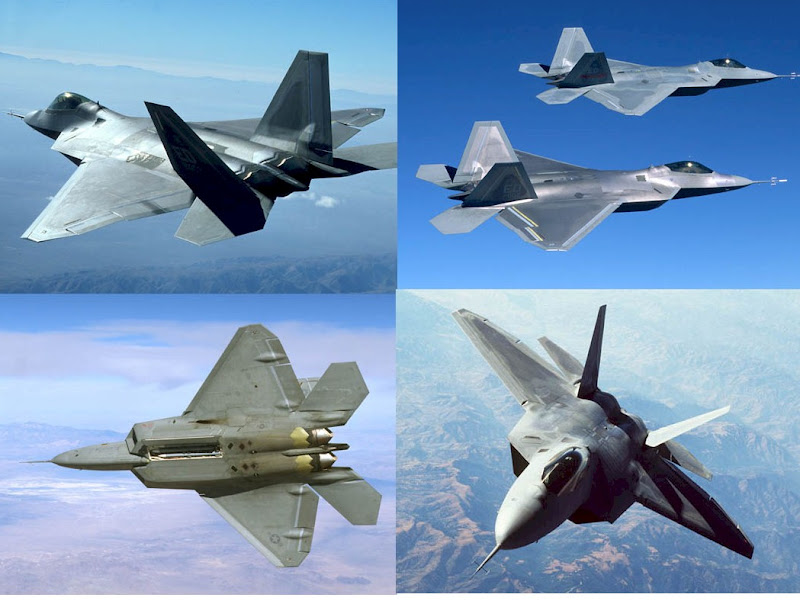
PLA admits F-22's great advantages, but does not plan to follow U.S.' way.
Unlike F-22's 4S characters, China has been eager to find an unusual countermeasure method in Network-Centric Warfare age. China foresees that a wide and integrated air situational awareness and combat system can face the challenge from stealth fighter. So China's next combat aircraft would not be one single fighter but an integrated JACS (Joint Air Combat System) family, which includes stealth strike fighter, Long-Range AA missile Launching platform and anti-stealth UAV.
The new striker probably has a low observation (RCS <0.3 href="http://picasaweb.google.com/cuteftpster/CoolMilitary2/photo?authkey=WeThqOU8RK4#5141495726054384626">
"Dark Sword" UAV
Although SAC's "Dark Sword" has displayed China's pre-research in UCAV area, China dose not trust UCAV can enter real combat in next 20 years.
At present J-10 has entered mass production and J-11B is near its final stage. When Russia's new Su-35 introduced in MAKS 2007, PLA Air Force evaluates it as the most advanced improved 4th generation fighter, comparing with Typhoon and Rafael. But China has no interests on Su-35 because J-11B/BS is enough to PLA Air Force, which proposes to pay more energy on revolutionary combat aircraft.

Russia's New Su-35 in MAKS-2007
Meanwhile, AVIC-I dose declare to become one of world Top 500 Corporations in the year of 2010. So AVIC-I, the most powerful aviation enterprise in China, prefers to re-organize forces from its subsidiaries for PLA’s future airpower and then acquires greater capital support from China Government.
This article published in Jane's Defense Weekly
Details have emerged of China’s next generation J-11B heavy air superiority fighter aircraft, a further development of Sukhoi’s Su-27SK (Chinese designation J-11) that ended production in 2004 ahead of its planned run.
Shenyang Aviation Corporation (SAC) assembled 95 J-11 fighters from imported Russian components, although the original project had called for 200 aircraft, and it is likely production was stopped in anticipation of the improved J-11B.
Although based on the Su-27SK, the latest incarnation has substantial improvements including a reduced radar cross-section (RCS), strengthened airframe and an improved fire control radar as well as new flight control system, glass cockpit and engine.
The improvements are planned to nake the aircraft to a fourth generation platform; the Yanliang Flight Test Center currently has three J-11B under testing (No 521, No 523 and No 524).
The most significant change for the aircraft is improved stealth; the changes are planned to bring the RCS from the 15 sqm of the Su-27 to under 5 sqm and possible as low as 3 sqm.
The change is not to the dynamic shape of the aircraft but involves the modification of the air intake lip with a radar wave shield and the installation of radar absorbing materials on the intake interior. In addition the RCS will be reduced with Chinese made signature reduction paint.
The strengthening of the airframe, a key aspect since the life expectancy of the aircraft has been criticised by the People’s Liberation Army Air Force, has been achieved through wind-tunnel tests of weapons carriage.
Additionally, the empty weight of the aircraft has been reduced by about 700 kg through the use of composite materials.
It is believed a further 10,000 hours has been added to the life of the aircraft compared with the Su-27SK.
The radar installed on the J-11B is believed to be more powerful than the Type 1473 installed on the J-10; it is estimated to be able to track 20 targets and simultaneously lock onto six targets.
J-11B will incorporate a quadruply-redundant digital fly-by-wire flight control system with mechanical back-up. Additionally, the aircraft has a fully glass cockpit but there are two variants - a reflecting head-up display (HUD) with four multi-function displays (MFDs) and a holographic HUD with three MFDs.
It is likely the former cockpit is for ground attack and the latter for air combat. The new cockpits integrate fire control radar, electro-optic countermeasure pods and infra-red search and track.
The improved radar and cockpit have allowed for the integration of newer weapons such as the CATIC PL-12 active radar-guided air-to-air missile.
The J-11 AL-31F engine will be replaced with the WS10A turbofan, providing longer lifespan and reduced fuel consumption.
Beyond J-12, China has plans for a carrier borne J-13, unlikely to be realised before 2015; the J-14, which is planned as a competitor to Lockheed Martin’s F-22, on the distant horizon at 2018; a two-seat J-11BS (2009); a naval J-11J (2010) and two-seat J-11JS (2011); and an improved J-13G and a navalised J-13J (2017).
More aircraft and unmanned combat aerial vehicles are being considered for even further in the future but new aircraft types will need to rise above the financial, political and industrial challenges that are likely to plague the programmes.